
Growing, I loved technology. In sixth grade, I saved up for an HP iPAQ hx4700. I thought of it as my first smartphone. I loved that thing.
Back then, the school’s Wi-Fi was open. I could connect, do research, work on projects and reports, and type on this little device. A lot of the fun was just exploring what I could do with it.
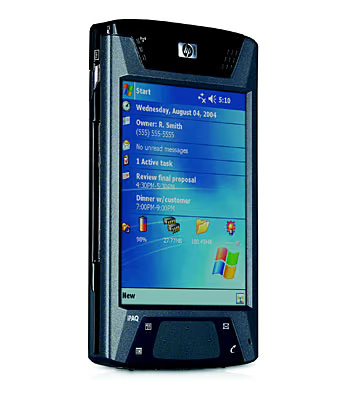
We didn’t even have Wi-Fi at home. I had AOL Instant Messenger, and I’d chat with friends here and there, but being online took some effort. Friends had to log on to a computer, sometimes with dial-up. In my case, I would find somewhere with Wi-Fi and send a few messages. There was a natural stopping point.

A different landscape for youth.
Through my youth callings at church, I get to spend time with young people as a youth leader. I see the landscape they’re navigating, and sometimes I look back at myself and wonder: I had a device that young, too. Why did my experience feel so different?
The biggest difference, from where I’m standing, is that my little device didn’t have today’s social media. No endless feed of short-form videos waiting for me every time I picked it up. Social platforms existed, but they weren’t the center of my experience. I usually had something I wanted to do, and then I was done.
That’s a personal memory, of course. It doesn’t explain every difference between then and now. But it’s made me curious about what the research actually says.
What the studies have me thinking about.
A 2019 study by Riehm and colleagues in JAMA Psychiatry followed 6,595 US adolescents. More than three hours of daily social media use, compared with no use, was associated with higher levels of later internalizing problems, such as anxiety and depressive symptoms, even after researchers accounted for a history of mental health problems. It was an observational study, so that association doesn’t prove social media caused those problems.
A study by Kelly and colleagues in EClinicalMedicine, using data from more than 10,000 fourteen-year-olds in the UK, also found an association between greater social media use and depressive symptoms. Poor sleep, online harassment, self-esteem, and body image were among the possible pathways they examined. That makes me think beyond a screen-time total: what is happening online, and what is it taking time away from?
The National Academies’ review of social media and adolescent health, released in December 2023, adds an important caution. Much of the evidence can’t establish cause and effect, and experiences vary between young people. Social media can also offer connection and support. I read that as a reason to pay attention to each kid’s actual experience and keep the conversation open.
Then I became a dad.
I’m a software developer. I love technology. I use it all the time, and I enjoy what it makes possible. I want my family to have that curiosity, too.
As a new dad, I’m often so tired, and with a foggy brain it’s easy to lapse into scrolling. I’d pick up my phone for something and get distracted without even meaning to.
My wife and I started talking about what we could change. If I’m feeling that pull as an adult who builds software, I want to have some humility about what we’re asking of young people.
The power of intentional friction.
We’d been seeing app blockers that use an NFC tag: a physical thing you tap with your phone. I didn’t think I needed one at first, but we wanted to see what a little intentional friction could do for us.
There are plenty of other options in this space. As a developer and designer, I still saw some room to build something that fit our family, at a price that felt reasonable. I could build a prototype and quickly adjust it to the behaviors we wanted. And, honestly, I liked the idea of creating a little brand around it and seeing what we could do. That’s how Taky started. You can see how Taky compares with Brick on the homepage.
With Taky, you choose the distracting apps to block and use a compatible NFC tag for normal unblocking. I was surprised by how effective having to get up and go to the tag was for me.
With AI making software easier to build, there’s a lot more competition, and it’s easy to release an app before it works well in everyday life. I want to put care into the design and the details people rely on. My aim is to keep Taky reasonably priced while leaving enough room to keep improving it, listen to feedback, and fix the things we miss.
It’s helped my wife and me with our household’s digital hygiene goals, and I wanted to share it. I hope it can be useful for your family, too.
Give them room to practice independence.
When I think about youth and social media, I keep coming back to independence. I want young people to enjoy learning, creating, and connecting with technology, and to practice deciding when to put it down.
If you’re thinking about an NFC app blocker for your teen, make choosing the boundaries part of the conversation. Which apps keep pulling them in? When would they like more space? Where should the tag live? Keep the things they need accessible, including ways to reach you, and revisit the setup together.
I want to practice those habits myself, too. A family conversation goes a lot further when the adults are willing to look at their own scrolling.
I’m still figuring out what all of this will look like for my family as we grow. I loved exploring technology in sixth grade. I want the next generation to have that joy, along with more room to choose how they spend their time.
Sources & further reading.
- Riehm et al. (2019). Associations Between Time Spent Using Social Media and Internalizing and Externalizing Problems Among US Youth. JAMA Psychiatry, 76(12), 1266–1273.
- Kelly et al. (2018). Social Media Use and Adolescent Mental Health: Findings From the UK Millennium Cohort Study. EClinicalMedicine, 6, 59–68.
- National Academies of Sciences, Engineering, and Medicine. Social Media and Adolescent Health (2024 report; findings released December 2023).