
I’ve been thinking about this as a new dad. If I don’t notice when I’m reaching for my phone, or have techniques for putting it down, how am I going to help my kids learn those skills? I have some practicing to do myself.
The catalyst for this post was Lele Schlaich’s infographic site about youth and short-form video. The numbers are jarring. It made me want to understand more about what kids are actually encountering.
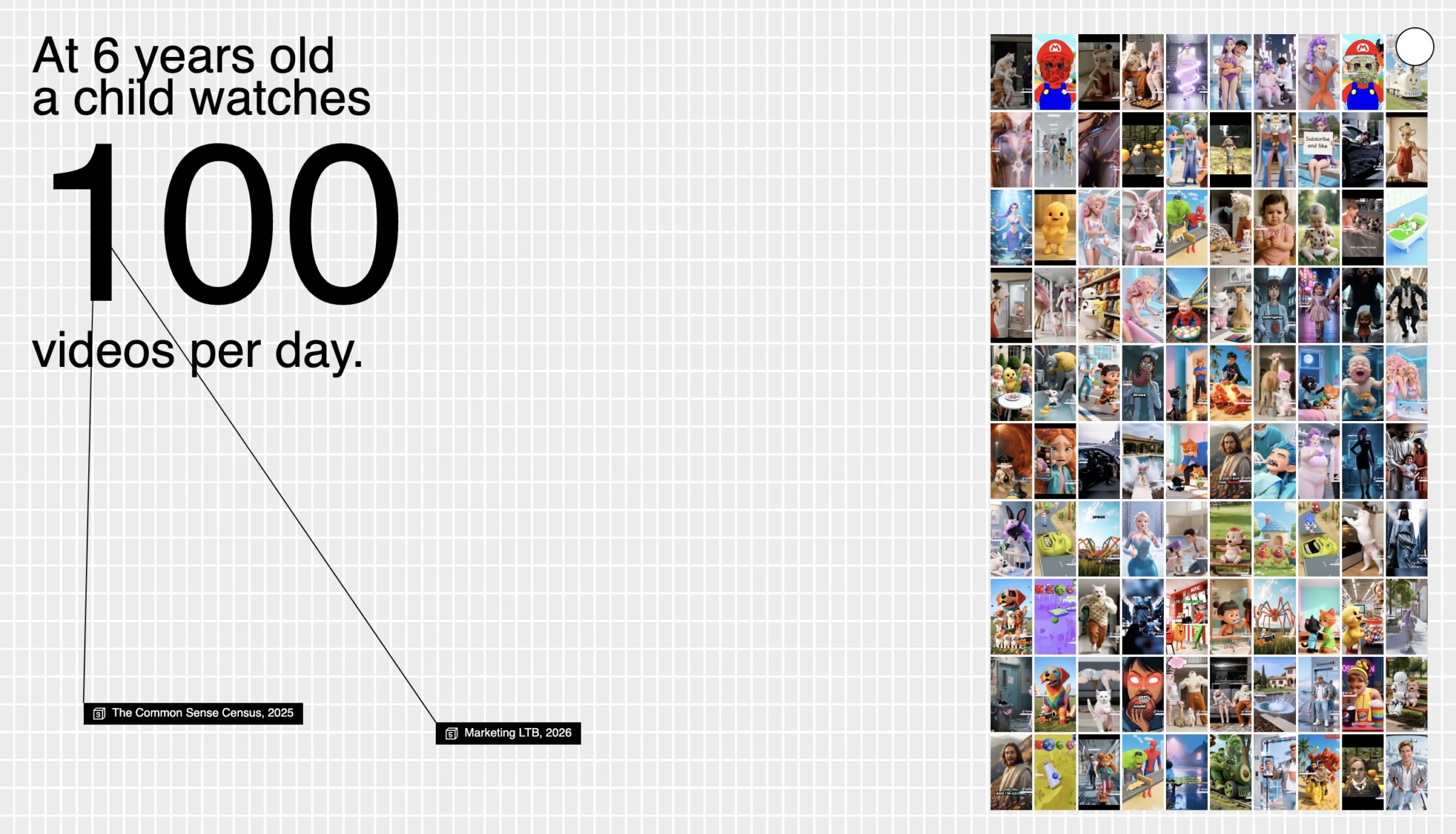
Just think about these numbers.
The 2025 Common Sense Census reports an average of 14 minutes a day watching short videos across children ages 0–8, rising to 22 minutes for ages 5–8. Those are averages across the age groups, not just children who watch.
And in Kapwing’s TikTok analysis, 97 of the 100 featured videos sampled under #cartoonkids were classified as “AI slop.” That’s one hashtag sample, not 97% of everything kids see. Still, it’s bonkers to think about how much of what looks like children’s entertainment can be mass-produced content.
These are different kinds of evidence, but both make me want to look beyond a screen-time total. What are they watching? How does it leave them feeling? Do they know when to stop, or how to ask for help?
Put the energy in together.
Dr. Michael Rich, founder of the Digital Wellness Lab at Boston Children’s Hospital, wrote The Mediatrician’s Guide about raising healthy kids in a screen-saturated world. His lab’s 5 M’s of Digital Wellness include modeling and mentoring. That’s the part I keep coming back to: these skills take our time, attention, and practice, too.
Jonathan Haidt’s The Anxious Generation also emphasizes parents acting together. The Surgeon General’s guidance recommends working with other parents on shared norms. Talk with the families your kids spend time with: could phones stay away during playdates? Could you agree on when screens come out? Consistent expectations mean one family doesn’t have to figure it all out alone.


Bring your kids into those conversations. Ask what feels difficult, explain your own habits, and choose boundaries together. Give them room to practice independence and revisit what’s working. We can start learning alongside them while we work on ourselves.
That’s part of why I built Taky for our household. A tool can help with the habits we choose, and we still have to put the energy into the conversations.
Read how Taky started, or try the Taky beta with your family.